


Arthrosis refers to degenerative changes in the joints, which begin with the thinning of cartilage tissue and over time lead to limitation or complete loss of mobility.The disease is more susceptible to older people, but it also develops in people under the age of 40.The prevalence of the diagnosis is high - about 20% of the world's population, where up to 80% are in patients over 70 years old.
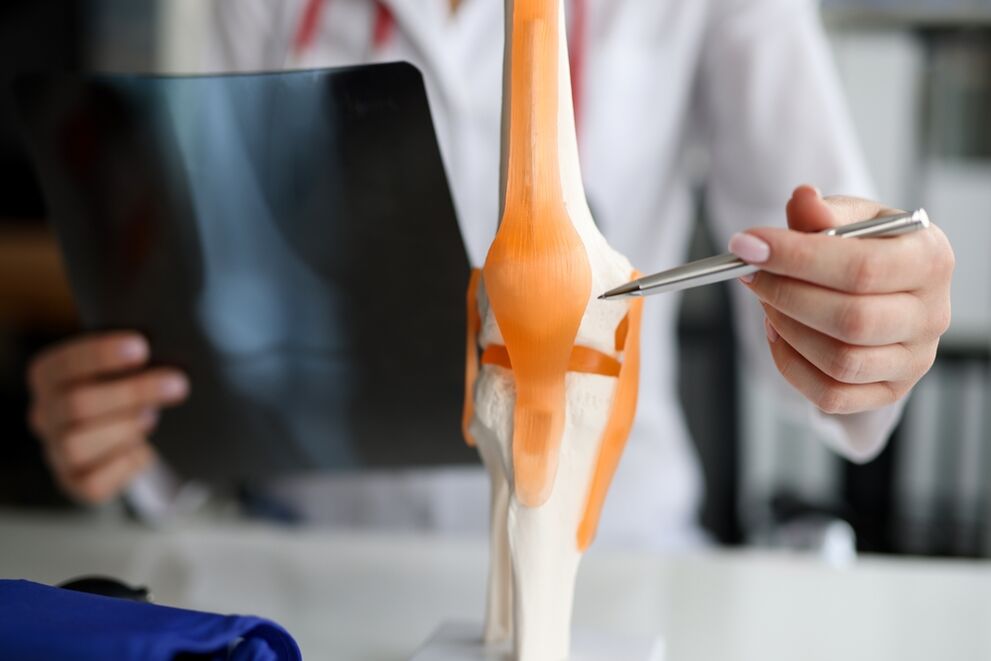
How does the disease develop?
To understand what arthrosis is (an alternative name is osteoarthritis), you need to understand how joints work.An articulation of two or more bones is surrounded by an articular capsule and remains mobile thanks to a cavity filled with synovial fluid.The elastic mass acts as a lubricant, preventing friction and premature wear of the articular surface.Cartilage, in turn, serves as a shock absorber.In an individual joint, its function is supplemented by a meniscus or disc.
The main cause of degenerative changes in arthrosis is the discrepancy between external influences and the joint's ability to withstand them.The role of provoking factors can be played by:
- age, injury, overweight;
- nutrient deficiencies;
- excessive physical activity;
- inflammatory process;
- genetic diseases;
- autoimmune reactions, etc.
Osteoarthritis in older adults is usually caused by the natural aging and wear and tear of bone structure.Therefore, after 50 years, it is diagnosed in every third person, and after 70 years, in every second person.Also, accelerated destruction of certain joints is typical for representatives of several professions: mechanics, loaders, weavers, ballerinas, etc.
Under the influence of unfavorable factors, cartilage tissue is damaged and becomes thinner.As a result, the bones shift and begin to rub against each other, causing significant discomfort.This process is accompanied by inflammation and swelling.The articular surface is deformed, the lost cartilage tissue is replaced by spine and bone growth, which prevents movement and causes deformity.In such cases, only strong painkillers can relieve the pain for a long time.
Types of arthrosis
The destructive process in the joint is called primary if the cause of its occurrence is unknown, and secondary if it develops against the background of certain diseases and conditions.Acute osteoarthritis is associated with infectious and stressful factors and is characterized by a rapid course.The chronic form develops gradually, threatening to limit physical activity if therapy is refused.Also, the type of disease is determined by the place of its development.
Arthrosis of the hip joint (coxarthrosis)
It is accompanied by pain in the groin area, which spreads to the surface of the thigh, sometimes affecting the lower leg area.In the early stages, difficulties arise when walking, moving up stairs, and when walking - lameness.After that, it becomes difficult for a person to do basic things related to the load on the painful joint: putting on shoes, riding a bicycle, tying shoelaces, walking without crutches.Muscle atrophy, shortened legs, and pain in the lower back and knees occur.In the absence of therapy, the possibility of disability is high.
Arthrosis of the knee joint (gonarthrosis)
Often diagnosed in women, it is severe with excess weight and varicose veins.Knee discomfort increases in bad weather, when moving up stairs, or during physical activity.As the disease progresses, flexion-extension movements are impaired, limb deformities, signs of inflammation and swelling appear.Osteoarthritis of the knee is often confused with meniscus damage, which is characterized by a more rapid development.
Osteoarthritis of the spine
A common form of the degenerative joint process, which can be triggered by both high load or lack of minerals, and some diseases that affect the vertebrae.The difficulty of diagnosis is due to the fact that the symptoms are masked as clinical manifestations of other pathologies.Osteoarthritis of the spine can develop in different areas: thoracic, lumbar, cervical, sacrococcygeal.Accordingly, the symptoms and names will be different.
Ankle arthrosis
It is often the result of domestic or professional injuries, excess weight, or problems with ligaments.It starts with pain and swelling in the ankle area, which increases after physical exercise and long walks.Cramping and limited mobility may be present and develop as the degenerative process progresses.Diagnosis is complicated by edema, which is associated with other diseases: diabetes, kidney damage, heart disease.
Shoulder joint arthrosis (oarthrosis)
Usually caused by a dislocation, a strong blow or a broken bone.There is a painful pain radiating to the lower part of the body, which is especially worrying at night.As the cartilage deteriorates, difficulty with abduction, rotation, and other arm movements occurs.This disease must be distinguished from heart problems and spinal diseases, which have similar manifestations.
Arthrosis of the foot joint
Affects both large and small joints of the foot.Most often, the destructive process develops in the thumb area, which is why it is mistaken for gout.The provoking factor is usually not foot damage, but the wrong selection of shoes in combination with flat feet.In a narrow space, the joint area becomes injured, thickened, inflamed, and loses mobility.
Arthrosis of joints and fingers
Damage to small joints, as a rule, is multiple and develops on both hands.This process is usually associated with changes in hormone levels, so it is often observed in women during menopause.In the acute stage, the joints become swollen, red, and nodules may appear on them.Gradually, the pain decreases, but the deformity of the fingers increases and mobility is lost.
Injury and pinched nerves in the hand area can cause a degenerative process in the wrist joint.A prerequisite is often tunnel syndrome, which causes blood circulation to suffer.Rhizarthrosis, which is provoked by a load on the base of the thumb, is also common.Pain with this type of arthrosis is moderate, but mobility may be affected and crunching may occur during exercise.
Temporomandibular joint arthrosis
Often occurs against the background of dental problems, autoimmune and endocrine pathologies.Often the provoking factor is chronic stress, causing tension in the muscles and convulsive clenching of the teeth, which affects the nutrition of the joint capsule.This disease is accompanied by discomfort in the jaw and can cause dizziness, hearing disorders, sleep, and facial symmetry.
Among the large lesions, the most common are gonarthrosis, coxarthrosis and arthrosis of the shoulder joint.Of the small ones, the joints of the hands and the spine are most often affected.Less often, degenerative processes are observed in the area of the patella, clavicle, talonavicular and elbow joints.They are usually provoked by certain injuries or stress, in particular professional sports or work with boring movements.
Other types of arthrosis
Another classification of the disease is related to the nature of the destructive process and the reasons that provoke them.If degenerative changes are associated with injury, they talk about post-traumatic arthrosis.When autoimmune diseases are the factors that trigger the thinning of cartilage tissue, rheumatoid and psoriatic types are distinguished.
If the disease affects one joint, they talk about localized arthrosis.If several joints are affected, the term polyarthrosis (or generalized osteoarthritis) is used.The progressive form of the disease refers to the rapid destruction of cartilage, which develops in just a few years.If the process is accompanied by bone growth and affects ligaments and nearby tissues, deformed osteoarthritis is diagnosed.
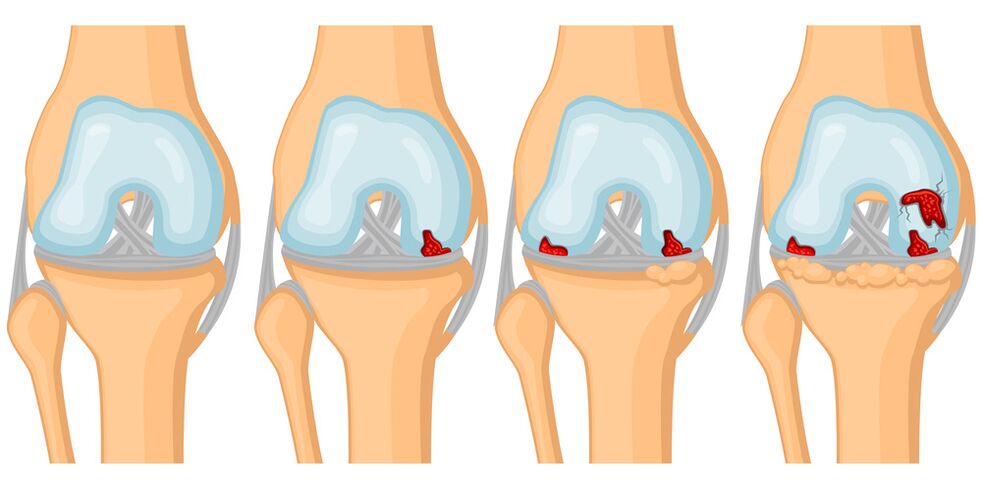
Stage of arthrosis
The degenerative process in the joint develops gradually, over time leading to complete thinning and destruction of the cartilage.The initial changes can only be seen at the cellular level, but when we move to the next stage of arthrosis, the clinical signs become more obvious.Their properties, as well as X-ray indicators, form the basis for the classification of diseases.
Arthrosis of joint level 1
Accompanied by minor changes in bone and cartilage tissue.They are still less visible during ultrasound and x-ray examinations, but are already visible on CT.With a significant load, short-term pain, swelling, and movement in the affected area is quite limited.There is slight narrowing of the joint space and sharpening of the bone edges.At this stage, the disease responds well to drug therapy.
Arthrosis of joint level 2
A corrupt process is in progress.The pictures show significant narrowing of the joint space, cartilage damage reaching 50%.The pain is still moderate, but becomes permanent.Characteristic symptoms of each type of arthrosis appear, such as lameness, decreased range of motion, creaking, accumulation of fluid in the synovial cavity, etc.Treatment of joint arthrosis at this stage of the disease makes it possible to slow down destructive changes.
Arthrosis of joint level 3
This disease leads to the complete destruction of cartilage.The articular surface develops significantly due to bone growth, the gap practically disappears.Cavities, cyst formation, and deformities may appear.Bone destruction begins, thinning of muscle fibers adjacent to joints.Flexion and rotation movements are limited.The pain is bad.In the absence of treatment, the process of fusion and ossification of articular structures begins, which is accompanied by a complete loss of mobility.Patients lose the ability to care for themselves and need constant care.
Early stages of arthrosis respond well to drug therapy, which allows you to maintain mobility as much as possible and stop the degenerative process.In advanced cases, it is only possible to alleviate the condition with the help of physiotherapy, taking chondroprotectors, anti-inflammatory and painkillers.In some cases, the only treatment option is surgery.